Akio Tsukino
24/02/2026
The Sky Beasts Look Different Today
Steampunk as a genre and an aesthetic has many defining iconography. Brown metal pipes with gold detailing, white steam smog over a Victorian city, cobblestone paths leading to expansive railway tracks, and brown vests with green tinted goggles. But none of those details capture my imagination the way a grand airship does. Flying behemoths gliding over cityscapes, casting its shadow on the onlookers below. Noblemen seated together at a luxurious bar while their children run past the promenades with a view on level with towering mountains. The majesty of it all.
Of course, there is a good reason why such an image needs to stay in our imagination. Though it may be a marvel of human ingenuity, the airship has always had a rough history to contend with. Today, in most cases, they are reduced to being nothing more than billboards in the sky. Advertisements that carry no real grandeur that they once were privy to. Despite this, the road that led here is worth looking into, even if it maybe to just immerse ourselves in an alternate timeline.
The Beginning of an Era
The story of the first airship starts all the way back in the 17th Century. Like many before him, Henry Cavendish had just stumbled upon the discovery of artificially producing hydrogen gas. Unlike his predecessors however, he was the first person to identify the properties of the gas such as its density.[1] And with the publication of his paper "On Factitious Airs"[2], the groundwork for the production of the main component in airships had begun. Though hydrogen may be the beginning of the airship story, as we will see later, it inevitably also leads to the end of the story.
The first ever proper "airship", as we define it, was built in 1852 by the French engineer Henri Giffard. What Giffard had designed was what falls under the category of a non-rigid airship. These sorts of airships or "blimps" relied on the pressure of the gas inside the air bag/s to keep its structure. This however, meant that blimps were much more vulnerable to the environment and thus could only fulfill certain niches.[3]
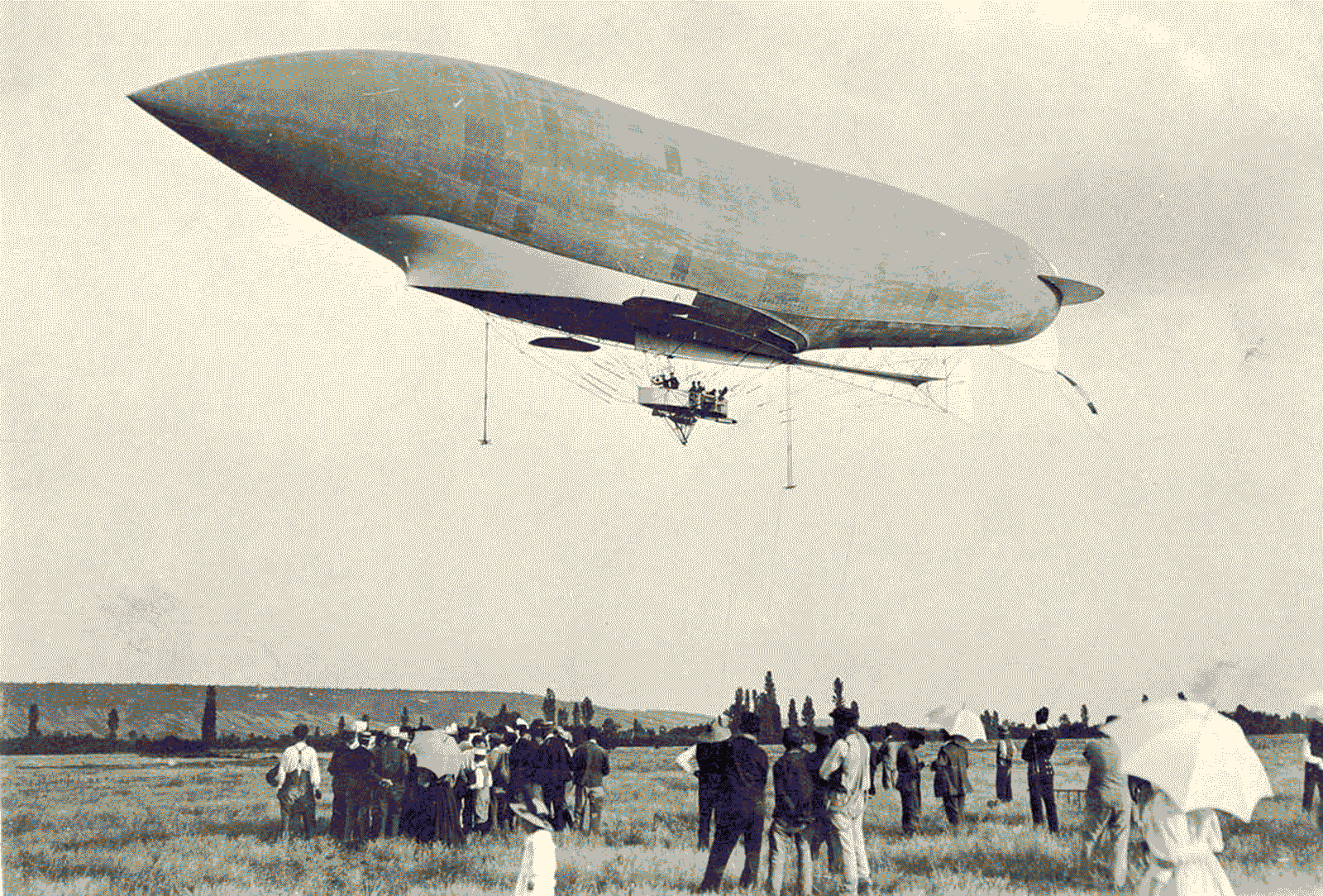
It isn't until the late 19th to early 20th century that we get to the true pinnacle of airship technology. German soldier and nobleman, Ferdinand von Zeppelin, in 1908, founded the now famous (or infamous depending on who you ask) company, Luftschiffbau Zeppelin. With this, the world was introduced to the first Zeppelin airship, LZ 1, in 1900.[4]
Zeppelins Take Over
Zeppelin airships differed to its predecessors in that it was the first ever "rigid" airship ever engineered. Unlike the blimps that came before it, Zeppelins had a rigid metal framework that was able to hold more than just one air bag. As a result, the zeppelins were able to support a much larger gondola, or airship car, than a blimp.[4]
By the time the first world war rolled around, the German government had been commissioning zeppelins to be used in the military. They were primarily used to conduct aerial bombings in both London and Paris. And even though these raids were not especially effective at causing destruction, they still managed to instill fear in the public.[5]
"Zeppelins would appear without warning, looming in the sky while panicked civilians scrambled for cover" - Britannica

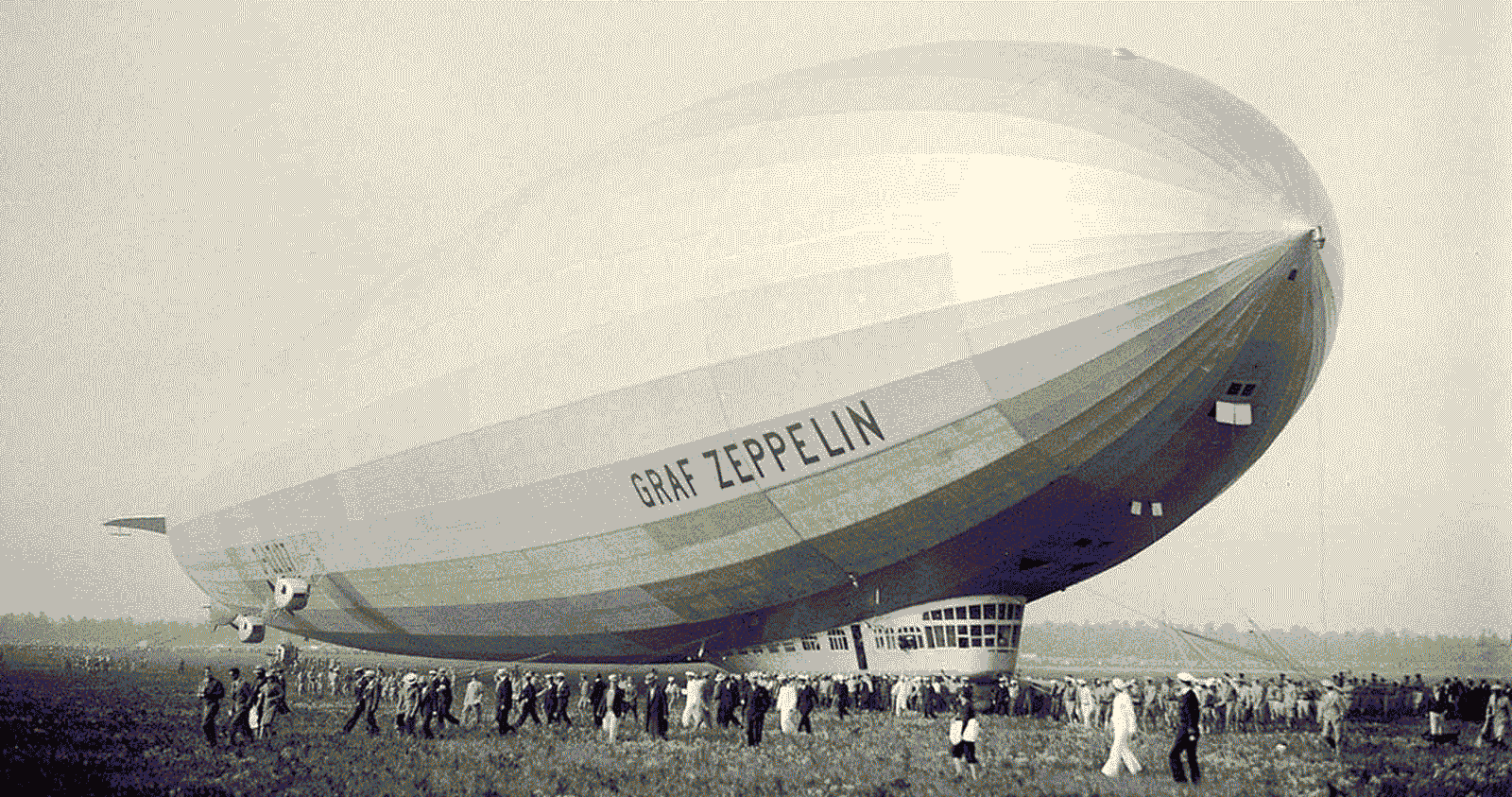
By the end of the war, the innovations in airships had culminated into the first airships being built for transatlantic flight. With this, came the era of commercial airship travel in 1928, with the completion of the massive Graf Zeppelin.[5]
The Graf Zeppelin was the first in the line of Zeppelins that would inspire the trope in current day steampunk fiction. This was the era of the luxury interiors, passenger accommodations, and absolutely hulking designs situated in even more massive hangers. This was also the beginning of the end.
The Nazis and the Hindenburg
The Nazis came to power in Germany on January 30th, 1933.[6] Luftschiffbau Zeppelin by this point had become a symbol of pride in the German zeitgeist, and thus smoothly transitioned into a weapon of propaganda for the reich. With anti zeppelin ammunition being perfected back in world war 1,[5] during this time around, the zeppelin brand was used more so to generate publicity for the Nazis more so than as a weapon of destruction.[7]
With this new goal in mind, Zeppelin began working on their most ambitious project yet. In 1936, the largest airship ever built and ever to be built, the LZ 129 or the Hindenburg, began its operations.[8]
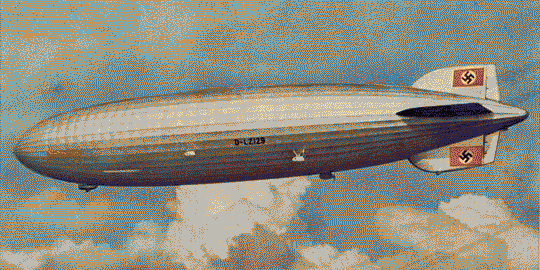
The Hindenburg was unlike all that came before it. It came decked out with 25 double double-berthed cabins and an additional 9 cabins accommodating a total of 72 passengers. The clean modern designs of the accommodations were carried over to the large dining rooms and extensive lounge area that came fitted with an aluminum piano. The passenger areas also came equipped with a writing room and even a smoking room with an attached bar that was separated from the rest of the airship by a double-door airlock. And unlike all that came before it, the Hindenburg also had extensive heated flooring throughout its passenger areas.[9]


Up until the designing of the Hindenburg, all Zeppelin airships relied exclusively on hydrogen as the main gas to give lift for the aircraft. This was in part, due to helium being a much more expensive gas that the Germans engineers could not reliably get their hands on. During the engineering of the Hindenburg however, there were plans to use helium as a fire preventative enclosing the hydrogen gas. However, with the USA having a monopoly on helium manufacture, and having a strict restriction on exporting to Nazi Germany, the plans were scrapped and solely hydrogen was used once again.[10]

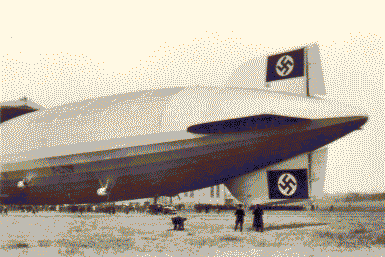
Though the Hindenburg was an icon of grandeur, we must not forget that it was first and foremost the pride of the Nazi regime. Both the interior and the exterior of the airship was adorned with Nazi symbols. The lounge had a portrait of Hitler and the tail fins of the airship had swastikas on them. It was often flown during major public events and was heavily used as a symbol of Nazi German superiority.[7]
"Nazi officials were very much aware of the symbolic value of the huge and impressive airship, and frequently called on Hindenburg for propaganda flights, often in company with the Graf Zeppelin." - airships.net

"Oh, the Humanity!"
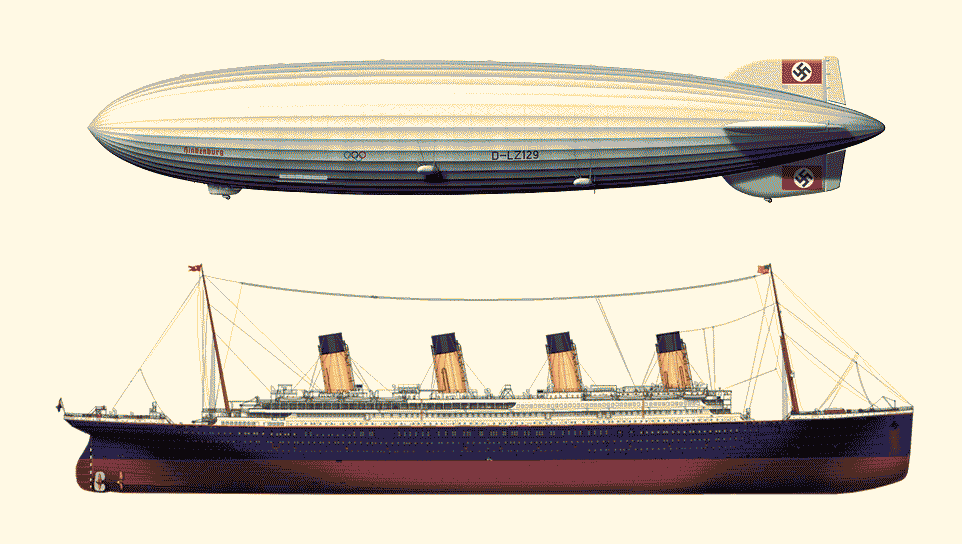
The Hindenburg is often compared to the Titanic. And whilst there are many comparable similarities between the two grand ships, the Hindenburg, unlike the Titanic, completed 62 trips successfully. What they most definetly do have in common however, is the tragic disaster that befell both of them.[11]
On May 3rd 1937, at 7:16PM, the Hindenburg left the Franfurt airfield to start its 63rd and final flight. The ship was carrying 36 passangers and 61 crew members, all looking to arrive at the Naval Air Station at Lakehurst, New Jersey. And though delayed by more than 12 hours, by about 7PM on May 6th, it seemed like their journey was finally coming to end. A few minutes past 7PM, the Hindenburg began its descent towards its destination.[12]
At about 7:21PM, crew mate R.H. Ward, noticed what he described as "a wave-like fluttering of the outer cover on the port side" of the airship.
"He (R.H. Ward) testified at the Commerce Department inquiry that it appeared to him as if gas were pushing against the cover, having escaped from a gas cell. Ground crew member R.W. Antrim, who was at the top of the mooring mast, also testified that he saw that the covering behind the rear port engine fluttering." - airships.net
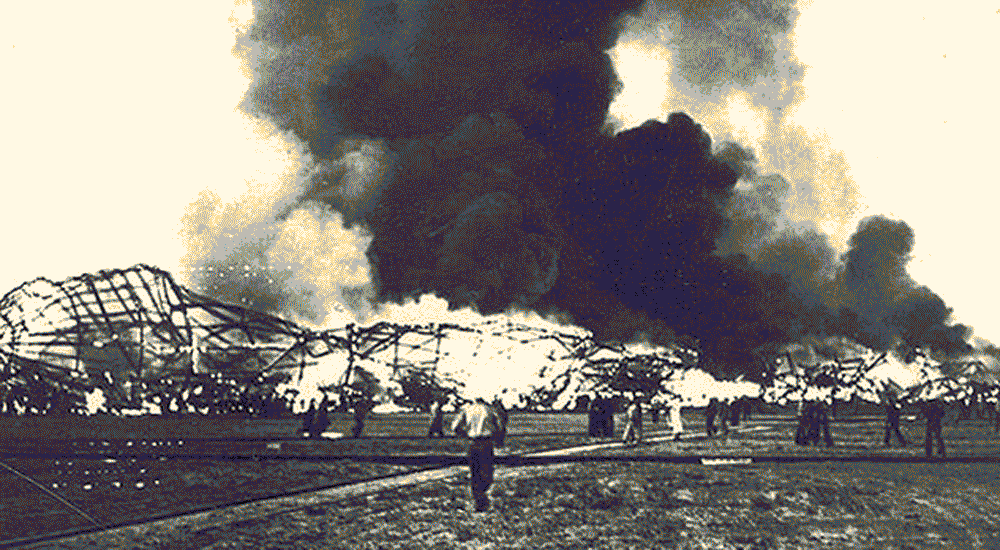
At 7:25PM, the sign of a visible flame was seen. Disaster had struck. The fire which begun at the tail of the ship began rapidly engulfing the entire airship, tipping it forward with the nose pointing towards the sky. Passengers and crew man alike, began tripping and tumbling towards the back walls of the ship as the ground crew strained to keep the massive hulking mass in trim.[12]
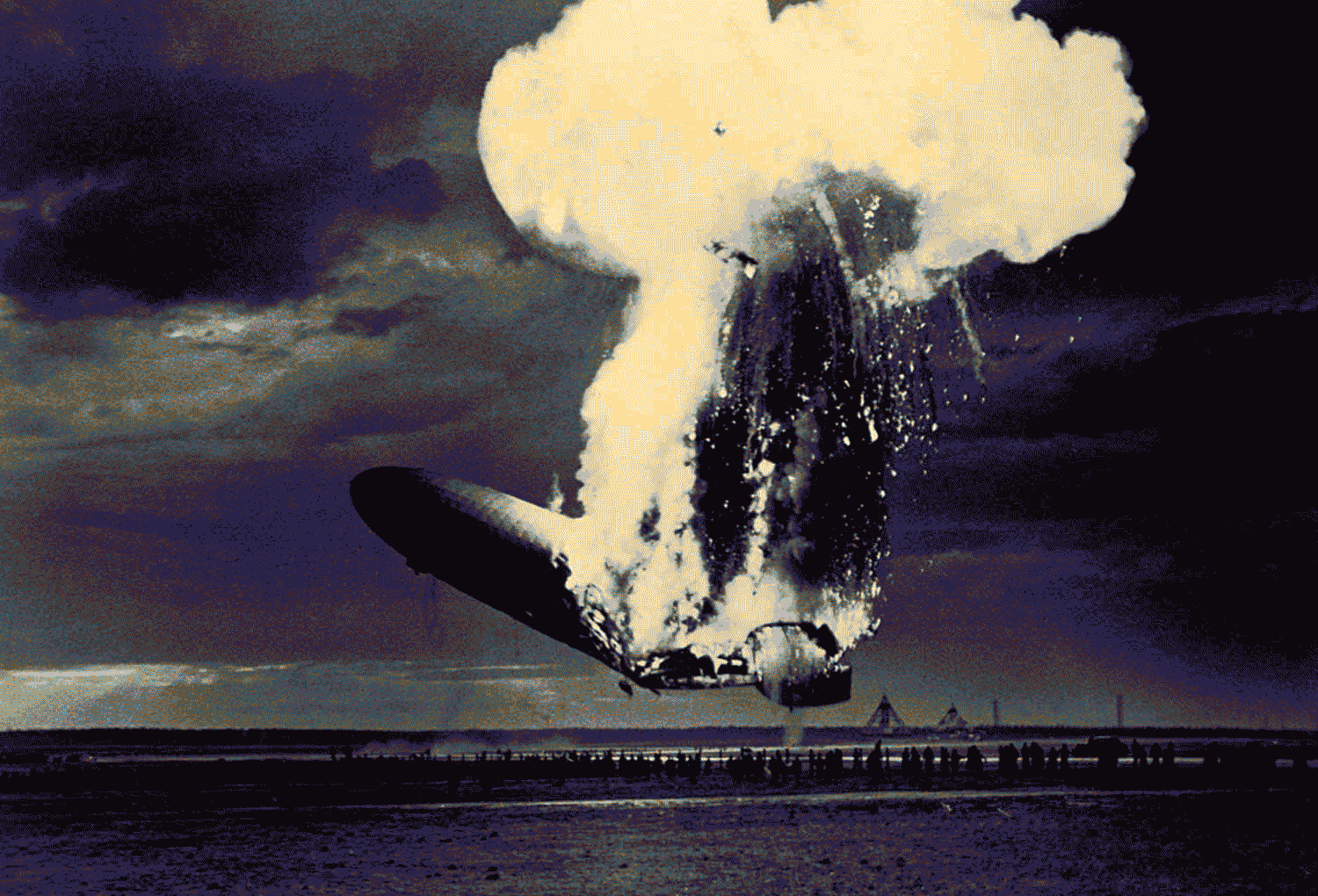
"Passenger Margaret Mather recalled being hurled 15-20 feet against the rear wall of the dining room and being pinned against a bench by several other people." - airships.net
With the ship coming closer to the ground, many of the passengers and crew men, especially those near the promenade windows, began jumping off of the burning ship.[12] The scene of those who jumped from the ship as well as onlookers and the ground crew running away from the falling behemoth was captured on news reel and was narrated live by the radio news reporter, Herb Morrison. The now infamous line, "Oh, the humanity!", was uttered by Morrison as the Hindenburg came down onto the ground in a fiery blaze.[5]
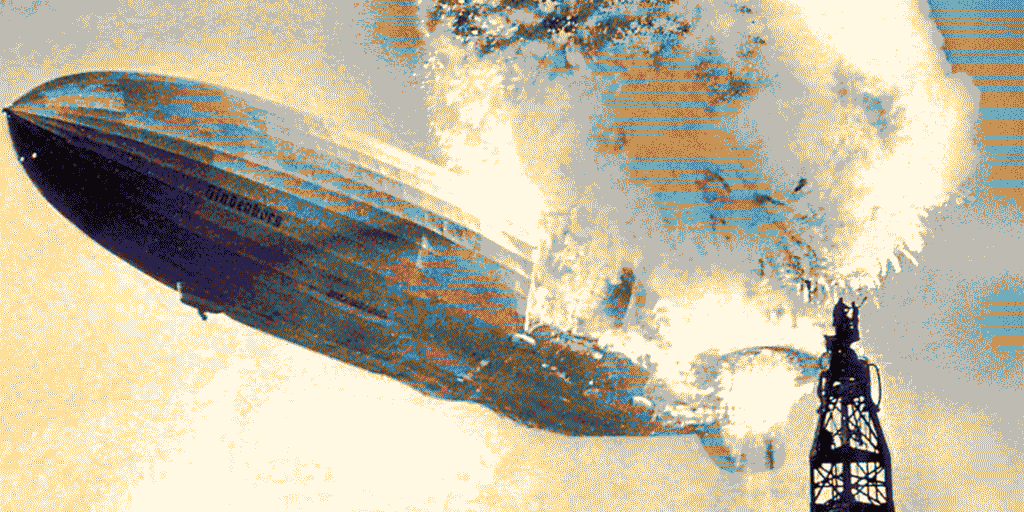
"Natural instinct caused those on the ground to run from the burning wreck as fast as they could, but Chief Petty Officer Frederick J. “Bull” Tobin, a longtime airship veteran and an enlisted airship pilot who was in charge of the Navy landing party, cried out to his sailors: “Navy men, Stand fast!!” Bull Tobin had survived the crash of USS Shenandoah, and he was not about to abandon those in peril on an airship, even if it meant his own life. And his sailors agreed. Films of the disaster (see below) clearly show sailors turning and running back toward the burning ship to rescue survivors; those films are a permanent tribute to the courage of the sailors at Lakehurst that day." - airships.net
It only took a matter of seconds for a bellowing fire to entirely consume the once goliath in the sky. Of the 97 people on board, 35 met their end inside the burning Hindenburg. One member of the civilian landing party, Allen Hagaman, also met his end as a result of the crash. While many ultimately escaped their untimely fate in the accident, those that died inside the ship, largely were determined by their whereabouts during the time of the fire spreading.[12]
"Mr. and Mrs. Hermann Doehner and their three children (Irene, 16; Walter 10; and Werner, 8) were also in the dining room watching the landing, but Mr. Doehner left before the fire broke out. Mrs. Doehner and her two young sons jumped to safety, but Irene left the dining room in search of her father, and both died as a result of the crash." - airships.net
The Conclusion of an Era
Even up until this point in history, there had been countless other tragedies involving airships, plenty of which were far more devastating when compared with the crash of the Hindenburg. From the very inceptions of the idea, airships had always been subjected to crashes and tragedies. The difference was, as unfortunate as it is, publicity.[12] The crash of the Hindenburg was caught on film and spread through the public zeitgeist like a plague. The status of the Hindenburg itself as an icon of Nazi German pride helped fuel the fires of the story that spread about the disaster.
Ultimately, the end of the era for airships cannot solely be attributed to the Hindenburg disaster. Even before the Hindenburg ever took flight, commercial heavier-than-air, that is to say planes, had started to become commonplace. Airships simply could not compete with the speed, reliability, safety and efficiency of airplanes.[12]
Today, the story of the airships live on only through the humble blimps. With the aftermath of the Hindenburg, zeppelins or rigid airships became obsolete. The surviving none-rigid airships, blimps, took the spotlight as companies such as Goodyear, pivoted into using them for research and marketing instead of competing with the now air travel standard planes. Modern blimps replaced the explosive and disastrous hydrogen gas used for lift since the conception of airship flight with the much safer and inert helium. In 2014, new innovation in the field finally came about after nearly a century with the introduction of "semi-rigid" airships built by Zeppelin for Goodyear.[13]

And with that, we are left wondering whether innovation will catch up once again, enough for us to see another Hindenburg. One that is not tainted by the vileness of a fascist regime. One that prides in beauty and grandeur over efficiency and speed. One that learns from the failures of the past and avoids the pettiness of conflict.
Until that day, all we can do is dream of the majestic flying beasts in our stories.